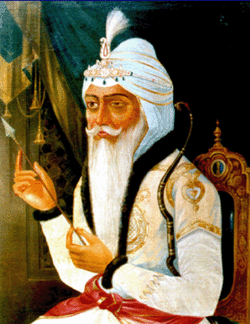
In 1857, a 29-year-old widow ignited a rebellion that shook the foundations of British rule in India. Rani Lakshmi Bai, the fearless queen of Jhansi, became a legend, wielding a sword on horseback while leading her troops against a mighty empire. Her story isn’t just about battles—it’s about a woman who defied norms, inspired a nation, and left an enduring legacy. This biography dives into the life of Rani Lakshmi Bai, revealing why her courage still resonates today. Discover the warrior queen’s journey and why it matters for understanding India’s fight for freedom.
Early Life & Background
Born in 1828 in Varanasi as Manikarnika Tambe, Rani Lakshmi Bai grew up in a world far removed from the royal courts. Her father, a Brahmin advisor, ensured she received an education rare for girls of her time—reading, writing, and martial arts. By age 14, she was skilled in horseback riding and swordsmanship, traits that foreshadowed her destiny. Married to Raja Gangadhar Rao of Jhansi in 1842, she became Rani Lakshmi Bai, embracing her new role with grace and determination.
Her early life wasn’t without hardship. Losing her mother young, she was raised in a progressive household that valued her intellect. This upbringing shaped her resilience, setting the stage for her later defiance against colonial powers.
[Suggested Image: A vibrant painting of young Manikarnika practicing swordsmanship. Caption: “Manikarnika’s early training shaped her into a warrior queen.” Alt Text: Rani Lakshmi Bai training with a sword as a young girl.]
Ascension to the Throne
When Raja Gangadhar Rao died in 1853, Rani Lakshmi Bai, then just 25, faced a crisis. The couple’s only son had died young, leaving no heir. The British East India Company, exploiting the Doctrine of Lapse, declared Jhansi would be annexed since there was no biological heir. Rani Lakshmi Bai refused to surrender her kingdom. Adopting a son, Damodar Rao, she declared, “Mera Jhansi nahi doongi” (I will not give up my Jhansi). Her defiance marked her ascension not just as a ruler but as a symbol of resistance.
Movement of Resistance to the Mughal Empire
Rani Lakshmi Bai’s resistance wasn’t against the Mughal Empire, which had weakened by the 19th century, but against British colonial rule. The 1857 Indian Rebellion, often called the First War of Independence, saw her emerge as a leader. Jhansi became a focal point of revolt when she rallied her people against British annexation. Her strategic acumen and charisma turned her small kingdom into a bastion of rebellion, inspiring others across India to rise up.
Diplomatic Standoffs
Rani Lakshmi Bai was no stranger to diplomacy. She negotiated with British officials to retain Jhansi’s autonomy, writing letters that blended firmness with tact. When diplomacy failed, she fortified Jhansi, preparing for war. Her standoffs showcased her as a shrewd leader who balanced words with action, earning respect even from her adversaries.
[Suggested Image: A historical sketch of Rani Lakshmi Bai addressing her court. Caption: “Rani Lakshmi Bai’s diplomatic prowess held off British advances.” Alt Text: Rani Lakshmi Bai addressing her court in Jhansi.]
About Wars
The Siege of Jhansi (1858)
The Siege of Jhansi was a defining moment in Rani Lakshmi Bai’s legacy. In March 1858, British forces under Sir Hugh Rose besieged Jhansi’s fort, outnumbering the queen’s troops. Rani Lakshmi Bai led the defense, personally commanding artillery and rallying her soldiers. Despite a fierce resistance, the fort’s walls were breached after weeks of relentless bombardment. Stories of her bravery—fighting with reins in her teeth and swords in both hands—became legendary. When defeat seemed imminent, she escaped with a small band of loyalists, her adopted son tied to her back, to continue the fight elsewhere. The siege showcased her tactical brilliance and unyielding spirit, cementing her as a national hero.
The Battle of Gwalior (1858)
After escaping Jhansi, Rani Lakshmi Bai joined rebel leaders like Tantia Tope in Gwalior, a strategic stronghold. In June 1858, she led a daring assault to capture Gwalior’s fort, galvanizing rebel forces. Her leadership turned the tide temporarily, but British reinforcements soon arrived. In the ensuing battle, she fought fiercely, dressed as a cavalry soldier. Her strategic moves disrupted British plans, but the odds were overwhelming. The Battle of Gwalior highlighted her ability to inspire and lead under dire circumstances, even as the rebellion faced setbacks.
[Optional Social Media Embed: An X post featuring a quote from Rani Lakshmi Bai: “We fight for honor, for freedom, for Jhansi.” Description: A viral post with an illustration of Rani Lakshmi Bai on horseback, shared by a history enthusiast account.]
Personal Life
Rani Lakshmi Bai’s personal life was marked by love and loss. Her marriage to Gangadhar Rao was affectionate, though brief. The death of their infant son devastated her, yet she channeled her grief into protecting Jhansi. As a mother to her adopted son, Damodar Rao, she showed fierce devotion, risking everything to secure his future. Her life wasn’t all war—she enjoyed poetry and music, often hosting cultural gatherings in Jhansi’s court, blending Maratha traditions with her progressive ideals.
Management and Cultural Accomplishments
As Jhansi’s ruler, Rani Lakshmi Bai was a visionary administrator. She reformed local governance, ensuring fair taxation and support for the poor. Her court patronized arts, fostering Marathi literature and music. She also promoted women’s education, a radical move for the time. Her ability to balance military leadership with cultural patronage made Jhansi a vibrant kingdom, even under the shadow of British threats.
Death and Succession
On June 17, 1858, Rani Lakshmi Bai fell in the Battle of Gwalior. Dressed as a soldier, she was mortally wounded while leading a charge. Her death at 29 marked the end of a legend, but her adopted son, Damodar Rao, survived. The British later granted him a pension, though he never ruled. Her death didn’t end her influence; it amplified her legacy as a martyr for India’s freedom.
[Suggested Image: A statue of Rani Lakshmi Bai on horseback. Caption: “Rani Lakshmi Bai’s legacy lives on in statues and stories.” Alt Text: Statue of Rani Lakshmi Bai, warrior queen, on horseback.]
Legacy
Rani Lakshmi Bai’s legacy endures as a symbol of courage and resistance. Her story inspired India’s independence movement, with leaders like Mahatma Gandhi citing her as an icon. Today, schools, streets, and regiments bear her name. Her life reminds us that one person’s defiance can spark a revolution. Explore more about India’s freedom fighters with our biographies on Subhas Chandra Bose and Bhagat Singh.
Controversies
Some British accounts portrayed Rani Lakshmi Bai as a ruthless rebel, accusing her of ordering massacres during the 1857 rebellion. However, Indian historians argue these claims were exaggerated to justify colonial oppression. Her adoption of Damodar Rao also sparked debate, with the British questioning its legitimacy. Despite these controversies, her heroism remains undisputed in Indian narratives, a testament to her enduring impact.