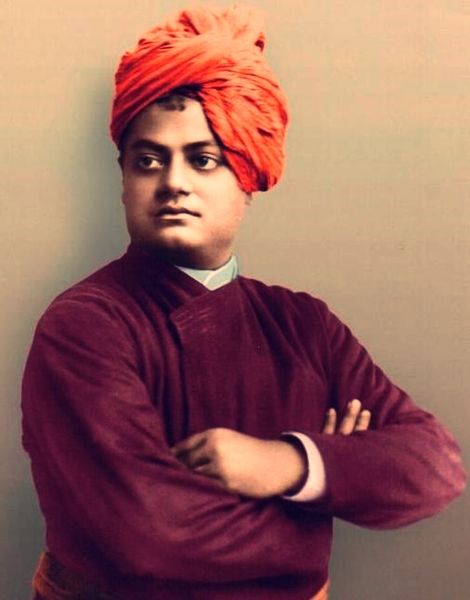
Ramakrishna Paramahamsa (1836–1886) was a revered Indian mystic and spiritual teacher whose teachings played a key role in the development of modern Hinduism. His deep devotion to God, simple living, and profound spiritual experiences attracted a wide following. Known for his emphasis on the unity of all religions, Ramakrishna’s life and teachings were instrumental in shaping the spiritual landscape of India in the 19th century, with his ideas later influencing prominent figures such as Swami Vivekananda, his most famous disciple.
Early Life
Ramakrishna was born as Gadadhar Chattopadhyay on February 18, 1836, in a small village named Kamarpukur in Bengal, India. Coming from a modest Brahmin family, his early life was marked by a deep spiritual inclination and an aversion to the materialistic world. From a young age, Ramakrishna was drawn to religious practices and often displayed a natural devotion to God. He was known for his deep love for the deities in Hindu temples, and from childhood, he demonstrated an extraordinary connection with the divine.
As a teenager, he was often overwhelmed by intense spiritual experiences. He was drawn to the teachings of the Hindu scriptures, particularly the Bhagavad Gita and the Ramayana, but he found himself restless in a world that seemed disconnected from his inner experiences. His spiritual quest led him to pursue intense religious practices, including meditation, fasting, and deep contemplation, seeking a direct encounter with God.
Spiritual Journey
Ramakrishna’s spiritual journey began in earnest when he was introduced to the practices of intense devotion. His experiences with the Divine led him to visit various temples in the region, where he would often fall into deep states of meditation. His breakthrough came when he encountered the Goddess Kali at the Dakshineswar Kali Temple in Kolkata, where he took up a position as a priest in 1855. It was here that he began his life of intense spiritual discipline, focusing entirely on realizing the presence of God through devotion.
Ramakrishna’s spiritual experiences became more profound over time. He practiced various spiritual paths, including devotion to God (Bhakti), meditation (Dhyana), and even tantra. He experimented with and integrated practices from different religious traditions, including Christianity and Islam, affirming his belief in the unity of all religions. According to Ramakrishna, the essence of all religions was the same—direct communion with the Divine, transcending religious boundaries. His experiences, such as deep states of ecstasy and visions of God, attracted the attention of many seekers and spiritual aspirants.
Career and Contributions
Ramakrishna did not aim to establish an organized religious movement, but his teachings spread widely through his disciples and followers. His role as a priest at the Dakshineswar Kali Temple provided him with a platform to impart his teachings to a large number of visitors, many of whom were prominent intellectuals and religious reformers of the time. Among his most devoted disciples was Swami Vivekananda, who went on to become one of the most influential figures in modern Hinduism.
Ramakrishna’s teachings focused on the idea that the ultimate goal of human life is to experience the Divine directly, whether through meditation, prayer, or devotion. He believed that spiritual practice and devotion could lead to union with God, and he encouraged people to pursue their own spiritual paths. One of his key teachings was that God could be experienced not only through traditional Hindu practices but also through other religious traditions. His broad spiritual vision led him to state that “all religions are paths leading to the same truth.”
He also emphasized the importance of living a life of simplicity and humility, modeling this through his own life and actions. Ramakrishna’s ability to embody his teachings made him an inspiration to many, and he gained a wide following, including people from diverse backgrounds—Hindus, Muslims, and Christians alike. His focus on love, compassion, and devotion created a spiritual climate that encouraged others to seek the Divine within themselves.
Major Achievements
Ramakrishna’s greatest achievement was his ability to bridge the gap between different religious traditions. His experiences in deep states of meditation and his capacity to commune with God through various paths helped establish him as a universal spiritual teacher. His teachings on the unity of religions were revolutionary, especially during a time when religious conflicts and division were widespread in India.
His disciples, especially Swami Vivekananda, spread his message both in India and abroad. Vivekananda’s participation in the 1893 Parliament of the World’s Religions in Chicago brought Ramakrishna’s teachings to the Western world, cementing his place as one of the most influential spiritual leaders of the modern age.
Ramakrishna also contributed to the development of the Ramakrishna Order, which was established by Vivekananda after Ramakrishna’s passing. This order, now known as the Ramakrishna Mission, is one of the most well-established spiritual organizations in India, with branches across the world dedicated to the service of humanity, promoting education, health, and spiritual upliftment.
Controversies
While Ramakrishna’s life and teachings were largely respected, some critics of his time did not fully embrace his unorthodox approach to spirituality. His tendency to integrate practices from different religious traditions, including Islam and Christianity, drew criticism from certain Hindu orthodoxy circles. However, Ramakrishna remained firm in his belief that the essence of all religions was the same, and he sought to unite, rather than divide, people based on their spiritual practices.
Furthermore, some of his more mystical experiences, such as his visions and deep states of trance, were met with skepticism by intellectuals and rationalists. Despite this, his popularity continued to grow, and his teachings eventually gained widespread recognition for their depth, compassion, and universal appeal.
Personal Life
Ramakrishna’s personal life was marked by a deep commitment to his spiritual practices. He lived a simple and ascetic life, often abstaining from material comforts and focusing entirely on his devotion to God. His physical health suffered due to the intensity of his spiritual practices, and he eventually contracted throat cancer, which led to his passing in 1886. Throughout his life, Ramakrishna was known for his humility, simplicity, and deep love for all living beings, which earned him the respect of both his followers and detractors alike.
Despite his popularity, Ramakrishna never sought wealth, fame, or power. His life was devoted to seeking and realizing God, and he encouraged his followers to do the same. He was known to treat everyone with equal respect, regardless of their social status or religious background, which contributed to his widespread appeal across all sections of society.
Legacy and Influence
Ramakrishna’s legacy lives on through his teachings, disciples, and the organizations that continue his work. His emphasis on the unity of all religions, devotion, and the power of direct spiritual experience continues to inspire people around the world. The Ramakrishna Mission, which was founded by his disciple Swami Vivekananda, continues to thrive as one of the leading spiritual organizations in the world.
Ramakrishna’s teachings also helped bring about a spiritual renaissance in India, influencing the development of modern Hinduism. His focus on the practical application of spiritual principles and his ability to transcend religious dogma laid the groundwork for a more inclusive and universal approach to spirituality that continues to resonate with millions of people worldwide.
Conclusion
Ramakrishna Paramahamsa’s life and teachings represent a timeless message of spiritual unity, love, and devotion. His ability to integrate the practices of various religions and his deep mystical experiences continue to inspire people across the globe. His influence on modern spirituality, particularly in India, is profound, and his legacy continues through his disciples, the Ramakrishna Mission, and the millions whose lives have been touched by his teachings of truth, peace, and self-realization.